

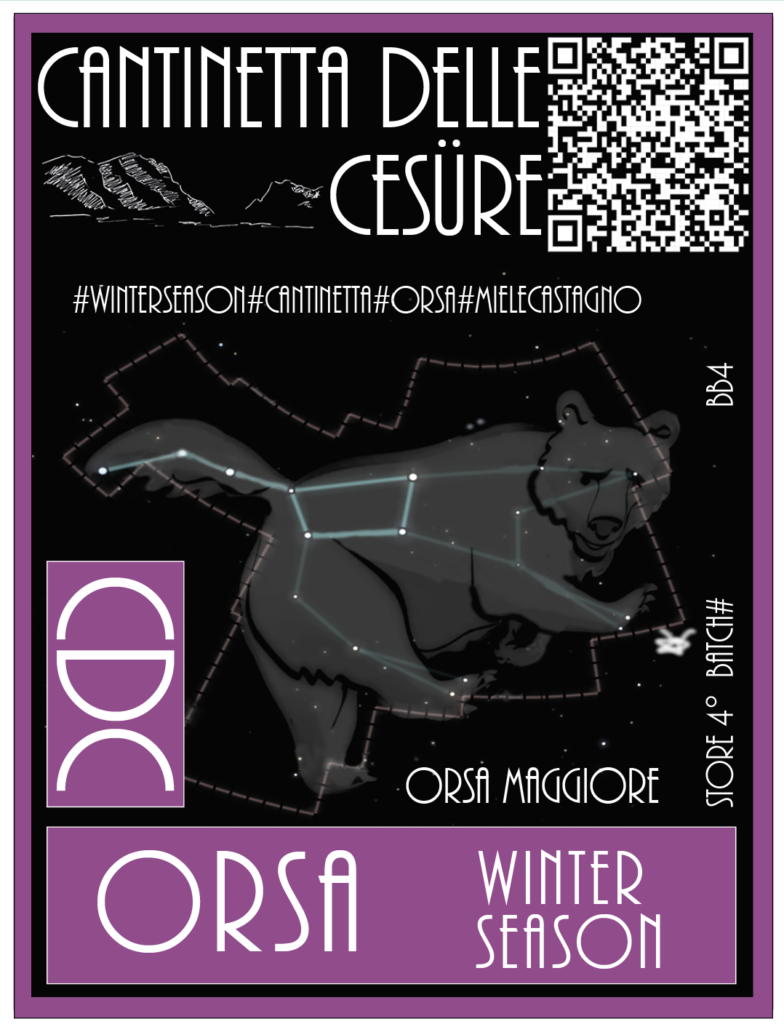
Winter season
Only for friends.
Production batch # 43
Production Date 14.12.2025, Best B4 12.2026. store at 4°
Ingredienti: Acqua delle cesüre,
Malto, Luppolo, lievito, spezie, Miele di castagno
Birra stagionale invernale. Le birre stagionali invernali sono birre che richiamano il clima freddo e le festività natalizie e possono includere spezie solide, zuccheri speciali e altri prodotti che ricordano la stagione delle feste.
Impressione generale:
Una birra più forte, scura e speziata che spesso ha un corpo ricco e un finale riscaldante che suggerisce un buon accompagnamento per la fredda stagione invernale.
Aroma:
Maltoso, speziato, fruttato ed equilibrato. È possibile un’ampia gamma, purché evochi il tema delle feste. Gli ingredienti e il concetto dichiarati definiscono le aspettative. La frutta è spesso scura o secca. Il luppolo è spesso sottile. L’alcol è spesso presente, ma morbido e di supporto. Gli aromi maltosi e zuccherini tendono a essere più equilibrati e a sostenere le spezie. I componenti devono essere ben integrati e creare una presentazione coerente. Vedere la sezione Aromi per i caratteri di spezie, malto, zucchero e frutta.
Aspetto:
Da ambra media a marrone molto scuro; le versioni più scure sono
più comuni. Trasparente, se non opaco. Generalmente limpida, anche se le
versioni più scure possono essere praticamente opache. Testa ben formata, persistente, di colore da bianco sporco a marrone scuro. Le versioni più scure sono più comuni. Trasparente, se non opaco. Solitamente chiaro, anche se le versioni più scure possono essere praticamente opache. Testa ben formata, persistente, di colore da bianco sporco a marrone chiaro.
Sapore:
Maltoso, speziato, fruttato ed equilibrato. Consentire una breve creatività per raggiungere l’obiettivo del tema. Spezie calde o dolci sono comuni. I sapori ricchi e dolci di malto sono comuni e possono includere caramello, pane tostato, nocciole o cioccolato. Possono essere presenti aromi di frutta secca o di buccia di frutta secca, come uva passa, prugna, fico, ciliegia, buccia d’arancia o di limone. Possono essere presenti aromi caratteristici di zucchero, come melassa, miele o zucchero di canna. Gli ingredienti speciali devono essere di supporto e bilanciati, senza mettere in ombra la birra di base. L’amaro e il sapore di luppolo sono di solito contenuti per non interferire con il carattere speciale.
Di solito finisce in modo piuttosto pieno e soddisfacente, spesso
con un leggero sapore di alcol. Le caratteristiche del malto tostato sono rare e di solito non sono più forti del cioccolato.
Bocca:
Il corpo è solitamente medio o pieno, spesso con una masticabilità
da malto. Carbonazione da moderatamente bassa a moderatamente alta. Carattere di invecchiamento ammissibile. Alcol caldo ammissibile.
Commenti:
Utilizza il profilo sensoriale di prodotti che suggeriscono la stagione delle feste, come biscotti natalizi, pan di zenzero, pudding natalizio di tipo inglese, dolci al rum, zabaione, alberi sempreverdi, potpourri o spezie per il brulé, bilanciati con una birra di base di supporto, spesso maltata, riscaldante e più scura. La descrizione della La descrizione della birra è fondamentale per la valutazione; i giudici dovrebbero pensare più al concetto dichiarato che a cercare di individuare ogni singolo ingrediente. L’equilibrio, la bevibilità e l’esecuzione del tema sono i fattori decisivi più importanti.
Storia:
Le festività invernali sono un momento tradizionale in cui i vecchi amici si riuniscono e in cui viene servita birra con una gradazione alcolica e una ricchezza leggermente superiori. Molti birrifici offrono prodotti stagionali che possono essere più scuri, più forti, speziati o comunque più caratterizzati rispetto alle loro birre annuali. Le versioni speziate sono una tradizione americana o belga, poiché i birrifici inglesi o tedeschi tradizionalmente non usano spezie nella loro birra. Molti esempi artigianali americani sono stati ispirati dalla Anchor Our Special Ale, prodotta per la prima volta nel 1975.
Ingredienti caratteristici:
Le spezie sono necessarie e spesso includono quelle che evocano il
periodo natalizio (ad esempio, pimento, noce moscata, cannella, chiodi di garofano, zenzero), ma ogni combinazione è possibile e la creatività è incoraggiata. Si può usare la scorza di frutta (ad esempio, arance, limoni), così come si possono aggiungere delicatamente altri frutti (spesso frutta secca o scura). Spesso si utilizzano aggiunte aromatiche (ad esempio, melassa, melassa, zucchero invertito, zucchero di canna, miele, sciroppo d’acero). Di solito si tratta di birre chiare, anche se esistono forti lager scure.
Da BJCP.
Ingredients:
Cesüre water, malt, hops, yeast, spices honey.
Winter Seasonal Beer Winter Seasonal Beers are beers that suggest cold weather and the Christmas holiday season, and may include solida spices, specialty sugars, and other products that are reminiscent of the festive season.
Overall Impression:
A stronger, darker, spiced beer that often has a rich body and warming finish suggesting a good accompaniment for the cold winter season.
Aroma:
Malty, spicy, fruity, and balanced. A wide range is possible, as long as it evokes the holiday theme. The declared ingredients and concept set the expectation. Fruit is often dark or dried in character. Hops are often subtle. Alcohol is often present, but smooth and supportive. Malty and sugary aromas tend to be greater in the balance, and support the spices. The components should be well integrated, and create a coherent presentation. See Flavor section for spice, malt, sugar, and fruit character.
Appearance:
Medium amber to very dark brown; darker versions are more common. Clear, if not opaque. Usually clear, although darker versions may be virtually opaque. Wellformed, persistent, off-white to tan head.
Flavor:
Malty, spicy, fruity, and balanced. Allow for breve creativity in meeting the theme objective. Warming or sweet spices common. Rich, sweet malty flavors are common, and may include caramel, toast, nutty, or chocolate flavors. May include dried fruit or dried fruit peel flavors such as raisin, plum, fig, cherry, orange peel, or lemon peel. May include distinctive sugar flavors, like molasses, honey, or brown sugar. The special ingredients should be supportive and balanced, not overshadowing the base beer. Bitterness and hop flavor are usually restrained to not interfere with special character. Usually finishes rather full and satisfying, often with a light alcohol flavor. Roasted malt characteristics are rare, and not usually stronger than chocolate.
Mouthfeel:
Body is usually medium to full, often with a malty chewiness. Moderately low to moderately high carbonation. Age character allowable. Warming alcohol allowable.
Comments:
Using the sensory profile of products that suggest the holiday season, such as Christmas cookies, gingerbread, English-type Christmas pudding, rum cakes, eggnog, evergreen trees, potpourri, or mulling spices, balanced with a supportive, often malty, warming, and darker base beer.
The description of the beer is critical for evaluation; judges should think more about the declared concept than trying to detect each individual ingredient. Balance, drinkability, and execution of the theme are the most important deciding factors.
History:
The winter holiday season is a traditional time when old friends get together, where beer of a somewhat higher alcohol content and richness is served. Many breweries offer seasonal products that may be darker, stronger, spiced, or otherwise more characterful than their year-round beers. Spiced versions are an American or Belgian tradition, since English or German breweries traditionally do not use spices in their beer. Many American craft examples were inspired by Anchor Our Special Ale, first produced in 1975.
Characteristic Ingredients:
Spices are required, and often include those evocative of the Christmas season (e.g., allspice, nutmeg, cinnamon, cloves, ginger) but any combination is possible and creativity is encouraged. Fruit peel (e.g., oranges, lemon) may be used, as may subtle additions of other fruits (often dried or dark fruit). Flavorful adjuncts are often used (e.g., molasses, treacle, invert sugar, brown sugar, honey, maple syrup). Usually
ales, although strong dark lagers exist. Entry Instructions: The entrant must
specify the type of spices, sugars, fruits, or additional fermentables used; individual ingredients do not need to be specified if a wellknown blend of spices is used (e.g., mulling spice). Entrant must specify a description of the beer, identifying either a Base Style or the ingredients, specs, or target character of the beer. A general description of the special nature of the beer can cover all the required items.
Source BJCP.